IPTV Stream Delay: Why the Goal Arrives Late
·5 min read
The goal goes in, your phone buzzes, and the screen still shows midfield. This is not a fault: every internet stream runs a few seconds behind live. What matters is how far behind, and how much of that is yours to change.
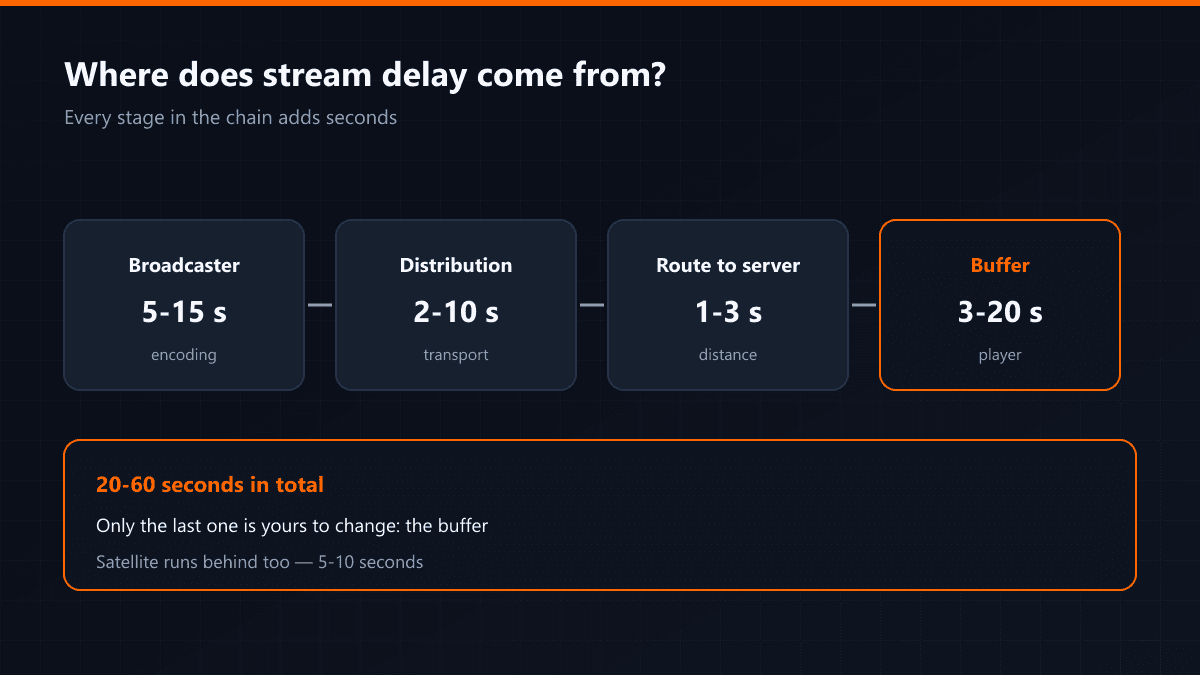
Where the delay comes from
| Stage | Delay added | In your hands? |
|---|---|---|
| Broadcaster's encoding | 5-15 seconds | No |
| Distribution network | 2-10 seconds | No |
| The route to the server | 1-3 seconds | Partly — server choice |
| The player's buffer | 3-20 seconds | Yes |
The total usually settles between 20 and 60 seconds. Satellite runs behind too, but less: 5 to 10 seconds. That gap is enough for social media to tell you first.
The part you can shorten: the buffer
The player gathers data ahead so the picture stays smooth. The larger that cushion, the more invisible any interruption becomes — and the further behind you are. They are two ends of one setting; gaining on one costs the other.
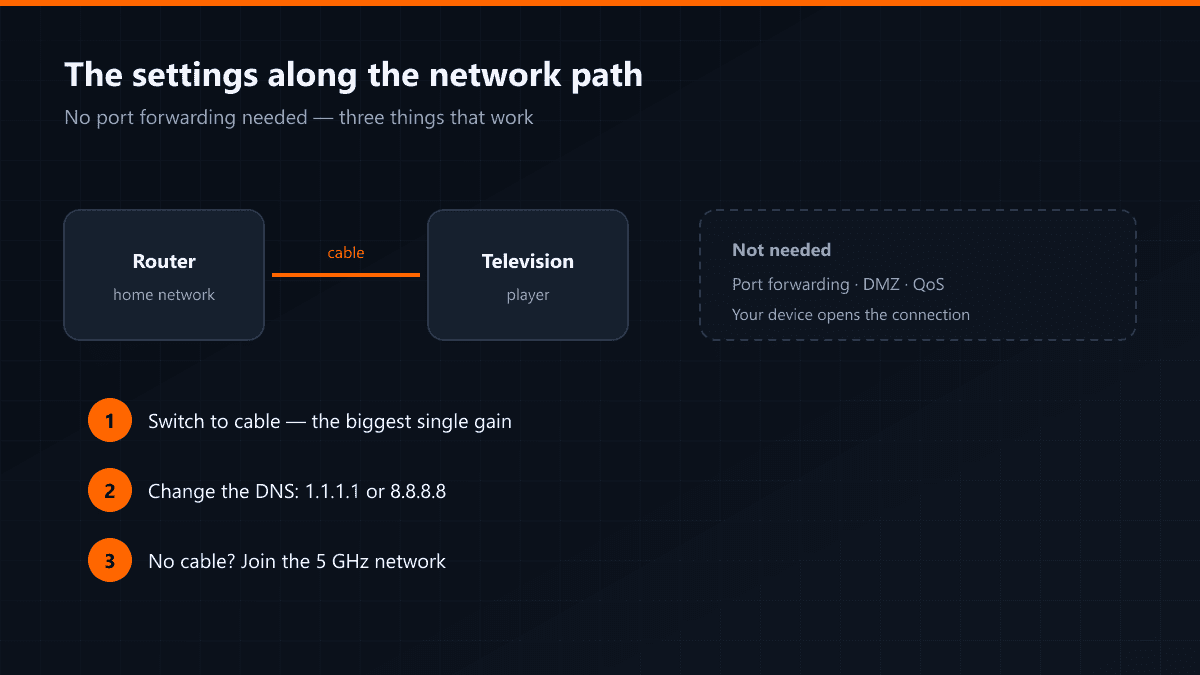
Before lowering the buffer, know this: on an unstable connection a small buffer does not shorten the delay, it stops the stream. Put the television on a cable first, then lower the buffer in steps.
Where the setting lives
- TiviMate: Settings > Playback > Buffer size
- IPTV Smarters: the player section inside settings
- VLC: Tools > Preferences > Input/Codecs > network caching
The practical answer: mute the notifications
Most of the delay is not yours to control, and trading stream stability for a few seconds rarely pays. Silencing the apps that push score alerts during a match is easier than fighting the buffer and works better. If somebody in the same house watches on satellite, the sound carries the same problem.
Delay is not the same as freezing
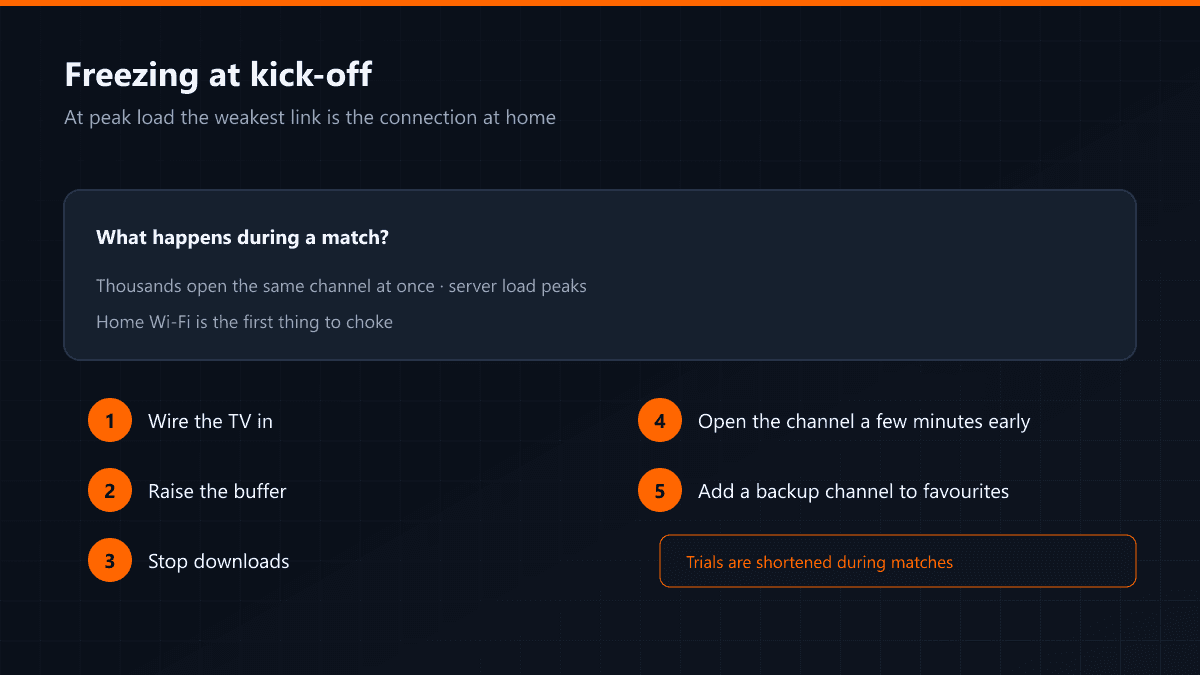
Delay is constant: the stream stays the same distance behind and the picture is smooth. Freezing is an interruption; the picture stops and resumes. If your complaint is "it arrives late", this is the right page; if it is "it stops", the freezing guide is. The two fixes are opposites — freezing wants a bigger buffer, delay wants a smaller one.
How much does the server matter?
Reaching a Turkish server from abroad lengthens the route and adds seconds to the total. In Europe, the European server lowers both the delay and the risk of freezing. That is a larger and more permanent gain than any buffer setting.