Is IPTV Legal? Rights, Responsibility and What to Know
·5 min read
The short answer to whether IPTV is legal: the technology itself is. IPTV is only a delivery method — broadcast carried over the internet. What decides the question is the right under which the content is distributed.
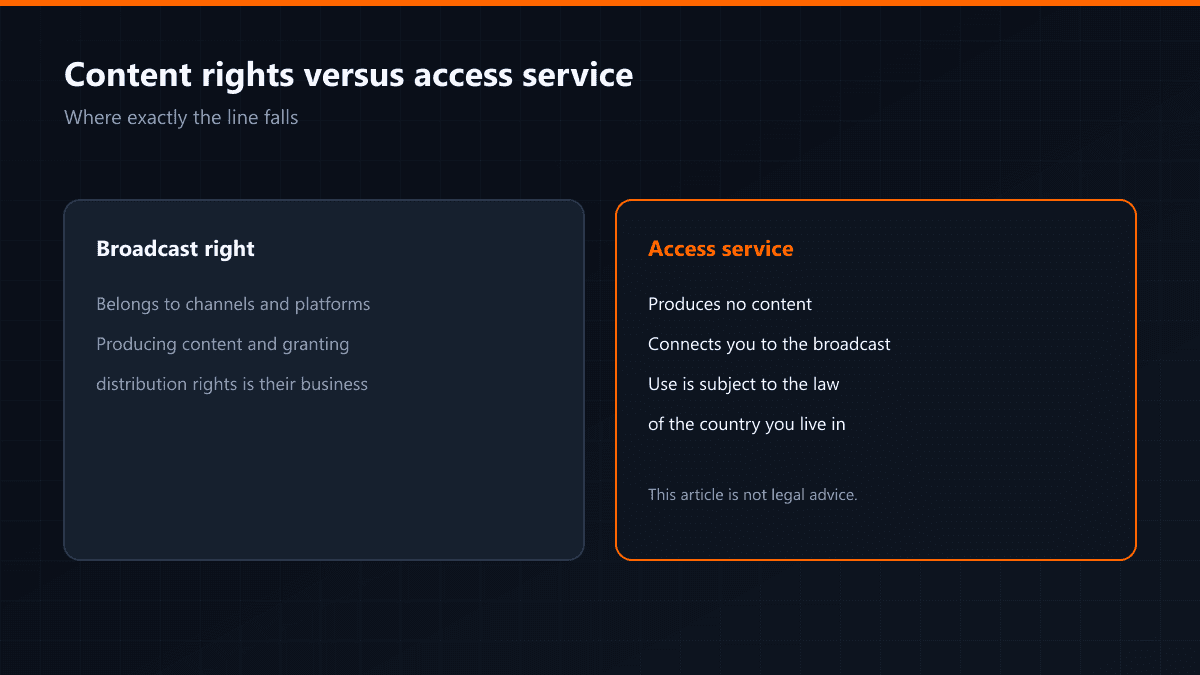
Content rights versus an access service
Broadcast rights belong to the channels and platform owners. Where a provider produces no content, what it offers is access. That distinction matters in contracts and in practice alike.
What to do as a user
- Take the law where you live into account; the rules differ from country to country.
- Keep the service to personal use — rebroadcasting and commercial screening are a separate matter.
- Avoid anyone who will not say who they are or give contact details.
This article is not legal advice. For a specific situation, check the law where you live and, if it matters, ask a lawyer.
Three terms people confuse
| Term | What it means |
|---|---|
| Broadcast right | Permission to air and distribute content; held by channels and platforms |
| Access service | The technical service that connects you to a broadcast |
| Personal use | Using the service at home, non-commercially |
Commercial use is its own question
Showing broadcasts publicly in a café, hotel or gym needs a permission separate from personal use. That distinction applies to satellite and cable too; it is not specific to IPTV. If the service is for your business, look into that permission first.
It varies by country
Most European countries regulate this differently from Turkey, and some are stricter. If you live abroad, the law that applies is the one where you are.
When choosing a provider
- Avoid anyone with no contact details and no identifiable address.
- Keep the payment traceable: a bank transfer is in your interest.
- Prefer a provider that states in writing what the service covers.