IPTV in the UK: London and Everywhere Else
·5 min read
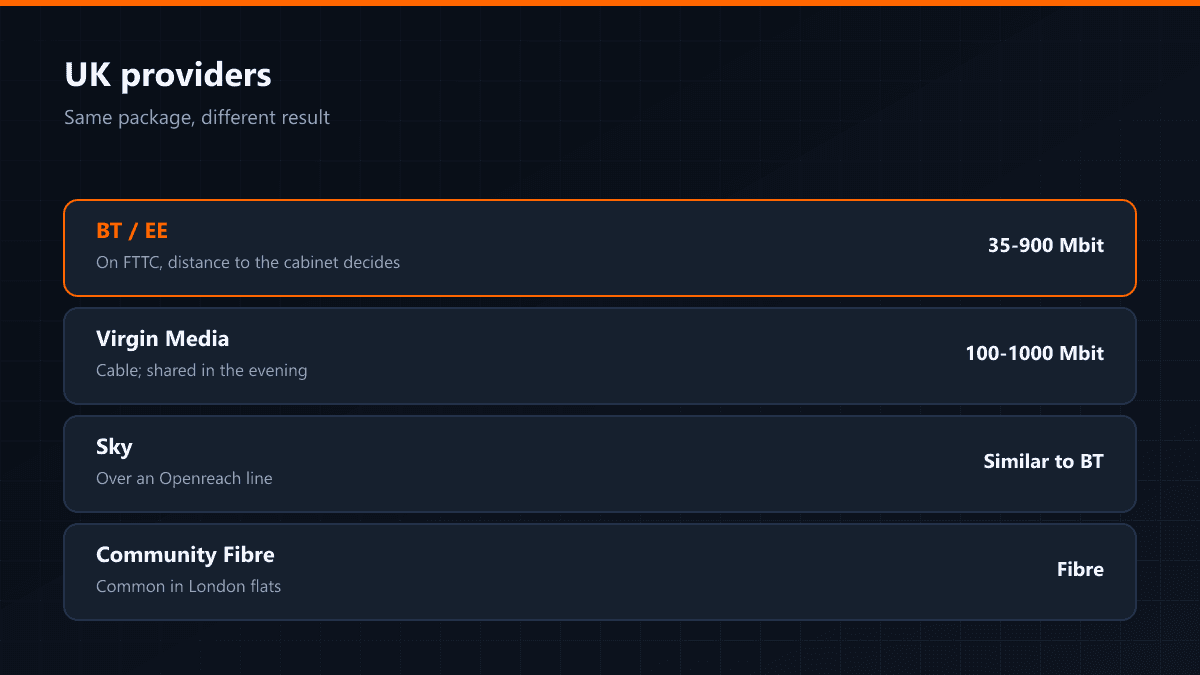
Connection quality in the UK varies enormously by address. Fibre has spread through London and the larger cities; across much of the rest of the country FTTC connections still run copper from the cabinet to the house. Two people on the same package get different results for exactly that reason.
Providers and how they behave
| Provider | Technology | Typical speed |
|---|---|---|
| BT / EE | FTTC or FTTP | 35-900 Mbit |
| Virgin Media | Cable | 100-1000 Mbit, shared in the evening |
| Sky | Openreach line | Similar to BT |
| Community Fibre / Hyperoptic | Fibre | Common in London flats |
On FTTC the speed falls with distance to the cabinet. Two neighbours on the same street can differ by a factor of two, and there is no way to change that — but knowing it sets the expectation correctly.
Which server?
The European one. Brexit has nothing to do with network infrastructure; the UK is still directly attached to the European backbones and the hop to Frankfurt is short. There is nothing to gain from picking the Turkish server here.
How the TV Licence fits in
Watching live television in the UK requires a TV Licence, and that obligation is independent of how you watch. An IPTV subscription does not replace it; they are two separate things and should not be confused.
Local channels
BBC One, BBC Two, ITV and Channel 4 are in the list. Across Haringey, Enfield and north London generally, watching both Turkish and British channels on one subscription is a common arrangement.